
Why Slice Bought a Broken Bank (When Everyone Else Applied for Licenses)

Navi can’t get a banking license. BharatPe is stuck at 49% ownership. Slice owns a bank 100%. Here’s the regulatory hack nobody saw coming.
2022: India’s fintech credit boom is dying.
RBI cracks down on unsecured lending. Co-lending partnerships collapse. Credit card fintechs are bleeding cash.
Most fintechs had two options:
Option 1: Apply for a banking license. Wait 3-5 years. Maybe get rejected (see: Navi).
Option 2: Buy mino
rity stake in a small finance bank. Never get control (see: BharatPe’s 49% in Unity SFB).
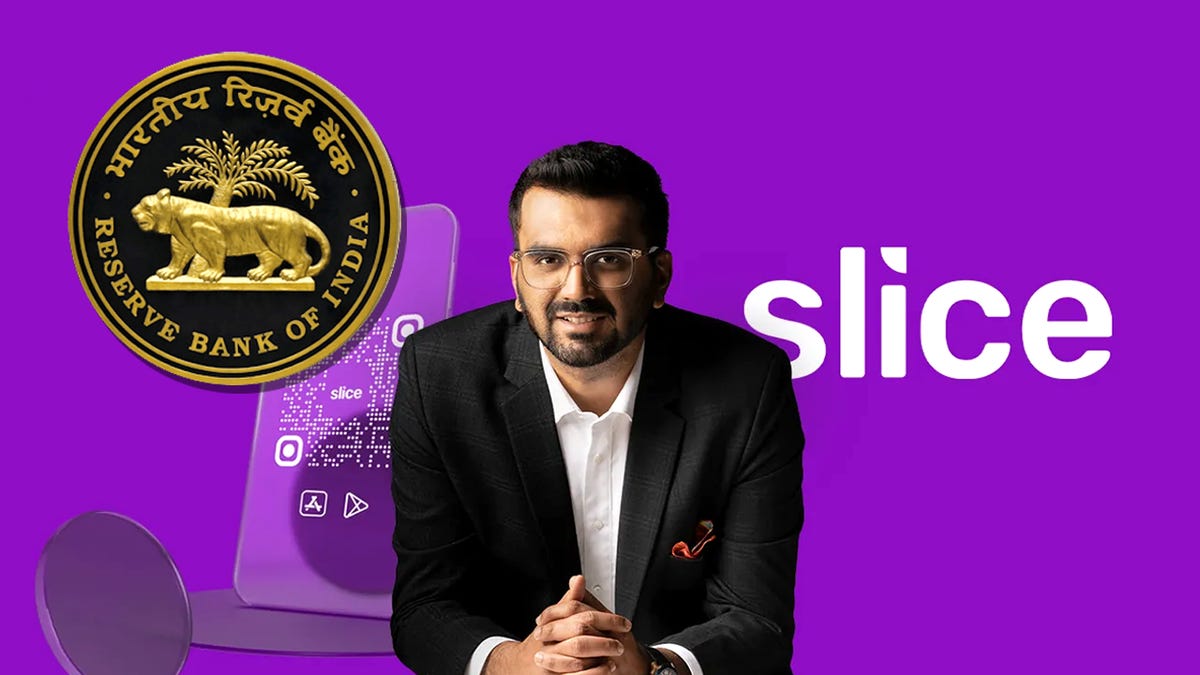
Rajan Bajaj chose Option 3:
Buy a struggling small finance bank. Not 49%. Not a partnership. 100% ownership.
October 2024: Slice merged with North East Small Finance Bank (NESFB).
9 months later: First profitable quarter. ₹28 Cr profit. 14.4% Net Interest Margin.
February 2026: Rajan Bajaj becomes the first fintech founder approved by RBI to run a scheduled commercial bank.
Everyone thought buying NESFB was desperation. It was the smartest regulatory move in Indian fintech.
Here’s why.
The Regulatory Trap Everyone Else Fell Into
By 2022-23, every credit-focused fintech hit the same wall:
The Problem:
You’re burning cash giving unsecured loans at 18-24% interest.
Your funding costs are high (you’re borrowing from NBFCs/banks at 12-15%).
Margins are razor-thin. Defaults are rising.
The Dream:
Become a bank. Take deposits at 4-6%. Lend at 18%. Print money.
The Reality:
RBI doesn’t give banking licenses easily. Especially not to fintechs.
What happened to everyone else:
Navi (Sachin Bansal):
Applied for Small Finance Bank license.
RBI: Rejected (too much tech, not enough banking experience).
Still trying in 2026. Still rejected.
BharatPe:
Bought 49% stake in Unity Small Finance Bank.
The catch: Can never own more than 49% (RBI rules for non-banking promoters).
The 2029 deadline: Must dilute to 10% by then.
Result: Investment, not ownership. Can’t control strategy.
Paytm:
Built Paytm Payments Bank. Got into huge regulatory trouble.
RBI restrictions in 2024 nearly killed the business.
The pattern:
Direct license applications = RBI says no.
Minority stakes = No control.
Slice found the third door.
The NESFB “Acquisition” (Actually a Reverse Merger)
What Slice bought in October 2024:
North East Small Finance Bank (NESFB) - a struggling bank in Assam/Northeast.

The bank’s problems:
Gross NPA: 11.89% (nearly 1 in 8 loans was bad)
Net Worth: ₹61 Cr (tiny)
Geographic concentration: Only Northeast India
Legacy tech: Old core banking system
Loss-making: Bleeding cash
Everyone asked: “Why buy a broken bank?”
What Slice Actually Got
1. The License (The Real Asset)
NESFB had what Navi couldn’t get: A valid Small Finance Bank license.
Buying NESFB = instant license.
No 3-year wait. No RBI application process. No rejection risk.
The hack: Instead of applying for permission, buy someone who already has it.
2. Deposit-Taking Rights (The Economics Flip)
Before merger (Slice as fintech):
Lend at 18% → But borrow at 12-15% from partners → Margins: 3-6%
After merger (Slice as bank):
Lend at 18% → Fund with deposits at 4-6% → Margins: 12-14%
Result: Net Interest Margin jumped from ~4.5% to 14.4% in 9 months.
Same lending. Different funding source. Economics transformed.
3. Full Control (Not 49%)
Unlike BharatPe’s 49% stake:
Slice owns 100% of the merged entity.
Rajan Bajaj is the MD & CEO (RBI approved Feb 2026).
Complete control of strategy, tech, products.
No 2029 forced dilution deadline.
This is permanent ownership.
The Cleanup (How They Fixed the Broken Bank)
Buying a struggling bank is one thing. Fixing it is another.
The 9-month turnaround (Oct 2024 - Dec 2025):
Problem 1: Bad Loans (11.89% Gross NPA)
The fix:
Aggressive provisioning and recovery.
Stopped lending in risky segments.
Result: NPAs dropped to 5.8% by Dec 2025.
Still high, but moving in the right direction.
Problem 2: Geographic Lock-in (Only Northeast)
The fix:
Slice’s digital infrastructure = instant pan-India reach.
NESFB had 28 branches in Northeast.
Slice has 10M+ users across India.
Result: Geographic diversification without opening physical branches.
Problem 3: Legacy Tech
The fix:
Replaced NESFB’s core banking system with microservices architecture.
Built from scratch by Slice’s tech team.
The cost: Operating expenses jumped to ₹616 Cr in 9M FY26.
Why? They’re essentially building a tech company inside a bank vault.
The payoff: Faster product launches, better UX, lower long-term costs.
The Numbers That Prove It’s Working
FY24 (Before merger):
Loss: ₹152.7 Cr
Gross NPA: 11.89%
Net Worth: ₹61 Cr
9M FY26 (After merger, Dec 31, 2025):
Profit: ₹27.97 Cr (first profitable period)
Gross NPA: 5.8% (cleaned up)
Net Worth: ₹845.34 Cr (14x growth)
Net Interest Margin: 14.4% (vs 4.49% pre-merger)
From bleeding to profitable in 9 months.
The One Problem Left: Efficiency
Cost-to-Income Ratio: 83.43%
For every ₹100 earned, Slice spends ₹83.
Peers (AU, Equitas): 60-65%.
Why so high?
Tech rebuild costs (₹616 Cr operating expenses).
Integration costs.
Building new systems while running a bank.
The challenge for 2026:
Bring this ratio down to 60-70% range.
Prove the unit economics work at scale.
Why This Move Was Genius
The Regulatory Arbitrage:
Applying for license = RBI scrutiny for years, high rejection risk.
Buying existing bank = RBI approves merger, gives you the license.
The timing was perfect:
2024: Small finance banks struggling post-COVID.
Valuations low. Sellers desperate.
RBI wanted consolidation (fewer weak banks).
Slice showed up with capital and tech to fix a struggling bank.
RBI approved because Slice was the solution to NESFB’s problems.
The Economics:
Credit cards funded by debt = Unsustainable margins.
Credit funded by deposits = 14.4% NIM.
The math went from broken to profitable overnight.
The Lesson
Regulatory moats beat product moats in fintech.
Slice’s credit card product was fine. Their UX was good. Their distribution was solid.
But without deposit-taking rights, the unit economics didn’t work.
The regulatory hack (buy vs. build) gave them:
Immediate license
100% ownership
Deposit-taking rights
Complete control
Cost: Fixing a broken bank.
Payoff: ₹152 Cr loss → ₹28 Cr profit in 9 months.
The question for 2026:
Can they bring costs down while scaling up?
83% cost-to-income ratio is survivable but not sustainable.
If they hit 65% while maintaining 14% NIM, Slice becomes a fintech-banking unicorn case study.
If costs stay high, they’re just an expensive turnaround.
My bet: They’ll figure it out. They’ve solved harder problems already.
Your turn:
When regulation blocks the obvious path (license application), is there an existing asset you could acquire instead of building from scratch?
Sometimes buying broken > building perfect.
Working in fintech or banking? What am I missing about Slice’s strategy? Drop a comment.
#Fintech #Banking #RegulatoryStrategy #Slice #SmallFinanceBank