
How CaratLane Solved the One Problem That Kills Every Jewelry D2C

Everyone said “Indians will never buy jewelry online.” CaratLane proved them wrong and then did something even crazier.
I’ve watched dozens of jewelry startups burn through millions trying to crack online jewelry in India.
BlueStone raised ₹300+ crores. Melorra had celebrity investors. Giva went viral on Instagram. They all solved parts of the puzzle—better designs, influencer marketing, affordable pricing.
But one problem kept killing them: You can’t feel a diamond through a screen.
Traditional wisdom said: Jewelry is tactile. High-value. Emotional. Indians will never buy it without touching it first.
Fast forward to 2026: CaratLane just posted ₹1,537 crores in quarterly revenue. 42% YoY growth. 370+ stores. 60% of their sales are women buying for themselves, not gifts.
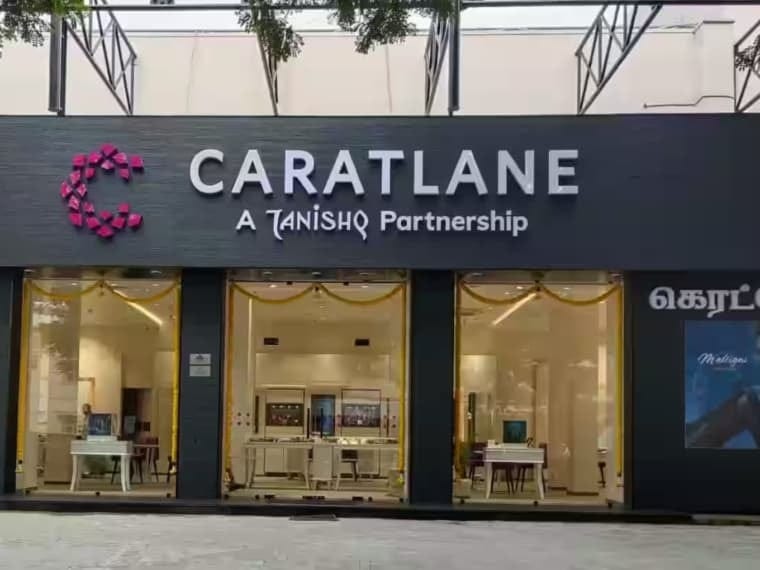
All by solving the “touch and feel” problem in the most counterintuitive way possible.
They didn’t make online jewelry work. They made jewelry impossible to ignore wherever you were.
The Problem Every Jewelry D2C Hits
By 2012-13, India’s jewellery market was stuck in a paradox.
On one side: Traditional jewellers like Tanishq. Heavy gold pieces. Serious shopkeepers weighing your purchase in grams. Family gatherings to “approve” the design. Jewellery as investment, not fashion.
On the other side: Modern women who wanted everyday jewelry. Pieces that cost ₹15,000, not ₹1.5 lakhs. Designs that matched their Zara blazer, not their wedding saree.
The gap nobody could bridge:
You can’t sell a ₹40,000 diamond ring the same way you sell a ₹4,000 dress online.
Because when people doubt authenticity, they need to touch it. See it sparkle. Feel the weight. Trust it’s real.
Every jewellery D2C tried to solve this by:
Better product photography
Certification papers
Money-back guarantees
Celebrity endorsements
None of it worked at scale.
Because the fundamental problem wasn’t trust in the brand. It was trust in the category.
The Contrarian Bets That Sound Insane
1. They brought the jewellery to your living room (before you committed to buying)
Every other D2C said: “Improve the website. Make checkout frictionless. Optimize for conversion.”
CaratLane said: “What if we just... come to your house?”
The “Try at Home” service:
You browse online. Select 3-5 designs you like. Book a slot.
A CaratLane consultant shows up at your home with a portable kit containing those exact pieces. You try them on. In your own clothes. Your own lighting. Your own mirror.
No salesperson hovering. No family judging. No counter between you and the jewelry.
The result: Conversion rates 3x higher than pure online browsing.
Why nobody else did this:
It’s operationally insane. You’re deploying consultants with high-value inventory to people who haven’t paid yet. Most D2Cs would call this “terrible unit economics.”
But CaratLane realized something: The cost of NOT solving the touch problem was losing the sale entirely.
A ₹30,000 diamond pendant with 3x conversion beats a ₹30,000 pendant with abandoned carts.
The “living room store” became their third channel—not online, not offline, but wherever the customer felt comfortable deciding.
2. They opened stores AFTER proving online (not to escape it)
This is where it gets really interesting.
Traditional playbook: Start offline, add online as “extra channel.”
CaratLane playbook: Prove online works, then use stores to solve what online can’t.
By 2026, they have 370+ stores. But these aren’t traditional jewelry stores.
What makes them different:
AR Mirrors: Try on 1,000+ designs in seconds without the store carrying that inventory. The mirror shows you wearing different pieces in real-time.
No Pressure Zones: Stores are designed for browsing, not selling. You can walk in, try on ₹2 lakh worth of jewelry, and leave without buying. No awkward questions.
Experience Centers: Many stores have workshops where you can see how jewelry is made. Transparency builds trust better than certificates.
The GTM insight:
They didn’t open stores to replace online. They opened stores to handle the specific friction points online couldn’t solve:
Last-minute gifting (walk in, buy, leave in 20 minutes)
Sizing and fitting for rings/bangles
The “I want to see it sparkle in real light” crowd
Building brand visibility in Tier 2/3 cities
Online handles: Browsing, research, comparison, self-gifting, convenience
Stores handle: Confidence-building, urgent needs, experience, local trust
They refused to choose between channels. They used each for what it’s actually good at.
3. They made diamonds the hero (when everyone worshipped gold)
In India, jewelry = gold. Always has been. 22-karat, 24-karat, bought by weight, sold for security.
CaratLane did something blasphemous: Made 90% of their business diamonds instead of gold.
Why this sounds crazy:
Indians traditionally see gold as the “real” investment. Diamonds are just pretty stones you can’t resell easily.
Why it worked:
Gold is a commodity. You’re competing on weight and purity. Margins are thin (5-8%). Customer picks whoever has the lowest making charges.
Diamonds are design-led. Same carat diamond becomes ₹20,000 or ₹50,000 based on design, setting, craftsmanship. Margins hit 40%+.
The strategic shift:
CaratLane positioned diamonds as “fashion” and gold as “investment.”
You don’t buy diamond studs thinking “I’ll sell these during tough times.” You buy them thinking “These match my work wardrobe.”
By de-linking jewelry from financial security, they created space for everyday, repeat purchases.
The innovation in 2025-26:
When gold prices skyrocketed, CaratLane launched 9-carat gold collections.
Less gold + same diamond sparkle = D2C-friendly pricing even when gold became unaffordable for the middle class.
They kept the aesthetic, dropped the commodity cost, maintained margins.
4. They targeted women buying for themselves (not men buying gifts)
Traditional Indian jewellery shopping:
Man decides to buy for wife/mother/daughter
Woman goes to store with family
Purchase is a “family decision”
CaratLane’s bet: What if women just bought their own jewellery?
This wasn’t a small tweak. This was redefining who the customer is.
The campaigns:
Not “Perfect gift for her” but “Treat yourself, you earned it.”
Not “Make her special day memorable” but “Because Tuesday deserves diamonds too.”
Not “Show your love” but “Show yourself love.”
The result: By 2026, 60% of CaratLane sales are women buying for themselves.
This is insane in a market where jewelry was almost always gifted or bought by families for weddings.
Why this matters for GTM:
Self-gifting has different purchase patterns:
Higher frequency (not waiting for occasions)
Lower ticket sizes (₹15K-30K sweet spot)
Impulse decisions (if you don’t need family approval)
Brand loyalty (it’s YOUR choice, not compromise)
CaratLane designed everything around this customer: the price points, the designs, the messaging, the convenience.
5. They’re doing quick commerce for diamonds (yes, really)
This is the 2026 move that makes me think they’ve lost their minds (in the best way).
“Dash” Delivery: 2-6 hour delivery for jewelry in select metros.
Think about that. Swiggy takes 30 minutes to deliver biryani. CaratLane takes 4 hours to deliver a ₹25,000 necklace.
Why this exists:
Last-minute gifting is a huge category. Forgot anniversary. Impromptu celebration. Surprise gesture.
Traditional jewelers can’t do this. Online D2Cs take 3-7 days.
CaratLane realized: Impulse isn’t just for cheap purchases. It’s for urgent needs.
How they’re pulling this off:
Local store inventory + delivery partners + real-time stock management.
If you order at 2 PM, nearest store with that design gets the order, packages it, sends it via premium logistics by 6 PM.
The GTM play:
Quick commerce isn’t about convenience. It’s about removing the last excuse to not buy.
“I’ll think about it” becomes “I’ll wear it tonight.”
That’s how you turn browsing into buying.
What’s Keeping Them Ahead Right Now
The Gen-Z Play:
“Shaya by CaratLane” - silver jewelry brand for Gen-Z who find even 14k gold too “mature” or expensive.
Instead of losing young customers to Instagram jewelry brands, they created a sub-brand that owns that segment.
The Diaspora Expansion:
Stores in New Jersey and Dallas targeting Indian-Americans who want modern designs but trust the Tata name.
Global ambitions without losing the India DNA.
The GTM Lessons That Actually Matter
The Three GTM Lessons I’m Stealing From CaratLane
1. Build touchpoints for doubts, not channels for scale
CaratLane didn’t ask “Should we be online or offline?”
They asked “What specific doubt stops someone from buying jewelry?”
Can’t touch it? → Try-at-home service Can’t visualize designs? → AR mirrors in stores Need it urgently? → Quick commerce Want to browse alone? → Online catalog
Each touchpoint eliminates one specific barrier to purchase.
What doubt is killing your conversion? Build the exact experience that removes it.
2. Redefine the category, don’t compete in it
CaratLane didn’t beat Tanishq at traditional jewelry.
They changed what jewelry means entirely:
From investment → self-expression From occasions → Tuesdays From gold by weight → diamonds by design From family buys → self-gifting
When you redefine the category, competitors’ advantages become irrelevant.
Is your brand fighting in an existing category, or could you redefine what the product is actually for?
3. Solve psychology first. Economics follow.
Try-at-home sounds insane: Send ₹2L jewelry to someone’s house before they pay.
But it solved the psychological barrier (”I can’t buy diamonds I haven’t touched”) that was killing 100% of sales.
Result: 3x conversion rate made the “expensive” model wildly profitable.
Most brands optimize for unit economics and wonder why nobody converts.
What psychological friction is blocking your sales? Could solving it unlock enough volume to make the economics work?
The Real Lesson
CaratLane didn’t solve the “touch and feel” problem with better technology.
They solved it by meeting customers wherever doubt existed and eliminating it on the spot.
Living room. Store. Phone. Quick commerce. AR mirror.
The channel doesn’t matter. Removing the barrier to “yes” does.
Your turn:
What’s the fundamental barrier keeping customers from buying your product?
Are you optimizing around it (better website, better messaging) or eliminating it entirely (new touchpoint, new category positioning)?
Sometimes the best GTM isn’t perfecting your current channel—it’s creating the channel that actually solves the problem.
Working in D2C or high-value retail? What am I missing about CaratLane’s strategy? Drop a comment—I learn most from people building in the trenches.
🗓️ PMM & GTM Jobs This Week
📣 Product Marketing
OLIVER (Brandtech Group) — PMM 📍 India (Remote) · 3–5 yrs World’s first in-house agency model, embedded inside Google. Drive GTM strategy and product launch coordination for one of the world’s largest advertiser ecosystems. View on LinkedIn →
Comviva — Head of PMM 📍 Delhi · 10+ yrs Tech Mahindra subsidiary, global telecom & fintech SaaS deployed across 90+ countries. Lead and build the entire product marketing function at scale. View on LinkedIn →
Vymo — PMM (GTM) 📍 Mumbai · 5+ yrs AI-powered sales engagement platform for BFSI, backed by Sequoia & Emergence Capital. Own GTM strategy, messaging, and competitive positioning for enterprise financial institutions. View on LinkedIn →
🚀 GTM Roles
OLIVER (Brandtech Group) — GTM Marketing Manager 📍 India (Remote) · 9–12 yrs Manage end-to-end GTM program management for Google product launches — coordinating across product, retail, media, and country marketing teams. View on LinkedIn →
About the author
Hey, I’m Deeksha. I currently work at Google as a Senior product marketing manager and I study how Indian brands win without burning millions on ads—and break down what you can steal for your own business. Every week, I pick apart one company’s go-to-market strategy so you don’t have to guess what works.
Let’s connect:
Have a brand you want me to analyze? drop me an email at behindthefeature@gmail.com
Come say hi on LinkedIn
Questions? Feedback? Hit reply-I read everything.